


Blogs
News & Blogs
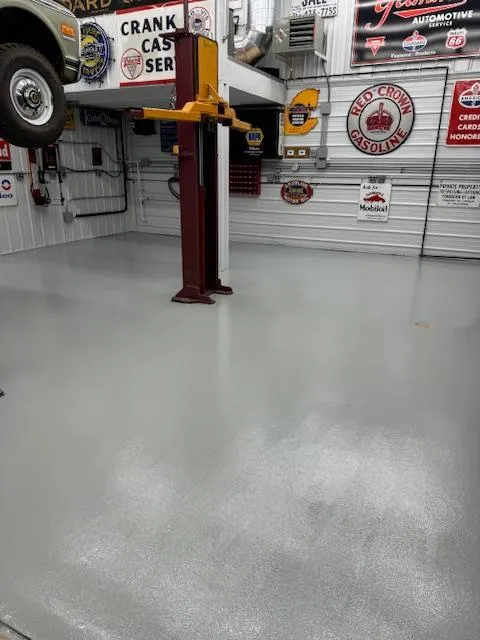
Why Floor Prep Matters for Iowa Garage Floors
Epoxy coatings are known for strength and long service life, but performance starts before the first coat touches the floor. Most failures trace back to poor surface preparation, not bad materials. When homeowners invest in residential or Iowa garage floors, they expect years of durability. The gap between a floor that lasts 15 years and one that peels in two often comes down to preparation. Let’s see why professional floor prep determines whether an epoxy coating succeeds or fails.
Professional Floor Prep Creates a Proper Mechanical Bond
Epoxy does not sit on top of concrete like paint. Installers must create a surface that allows the coating to grip the slab.
Concrete looks smooth and solid, yet the surface often contains tight pores and hardened laitance. If installers skip mechanical grinding or shot blasting, the slab stays too smooth. When that happens, epoxy rests on the surface instead of locking into it.
Professional grinding opens the pores of the concrete and creates the right surface profile. This profile gives the epoxy something to grab. As the coating cures, it bonds into the slab instead of forming a thin layer on top. That bond holds the entire system in place.
When installers rely on acid etching or light abrasion, they leave much of the surface untouched. Weak bonding leads to peeling and lifting. A proper mechanical bond forms the base of every long lasting epoxy floor.
Professional Prep Removes Hidden Contaminants That Cause Failure
Concrete holds more than dust and debris. Oil stains, grease, tire residue, curing compounds, and old sealers often sit below the surface.
Even small traces of contamination interfere with adhesion. Epoxy may look fine on day one, yet weak areas develop under the coating. Over time, those areas start to peel or flake.
Professional surface preparation removes these contaminants instead of covering them. Mechanical grinding cuts below the surface layer and exposes clean, solid concrete. This step allows the epoxy to bond directly to the slab.
Cleaning alone does not solve the problem. A degreaser treats the top layer, but embedded oils and sealers remain trapped in the pores. If installers coat over those materials, the bond fails. Thorough preparation eliminates the hidden causes of peeling before the coating goes down.
Professional Prep Addresses Moisture Before It Becomes a Problem
Moisture causes many epoxy failures. Concrete slabs release vapor even when they feel dry to the touch. If installers trap that moisture under a coating, pressure builds and forces the epoxy away from the surface.
Moisture Testing and Evaluation
Professional installers test the slab before applying any coating. Moisture tests measure vapor emission levels and help determine whether conditions support a long term bond.
If vapor levels run too high, the coating may blister or bubble months later. By testing first, installers avoid these problems. They select the right system for the slab or recommend steps to manage moisture.
This process protects the floor and the property owner. Instead of reacting to failure later, professionals address moisture at the start. Careful evaluation prevents costly repairs and extends the life of the epoxy system.
Professional Prep Repairs and Stabilizes the Concrete Surface
Epoxy improves the look of concrete, yet it does not fix structural issues. Installers must repair cracks and damaged areas before they apply any coating.
Crack and Surface Repair
During professional preparation, installers fill cracks, patch spalled areas, and level uneven sections. These repairs create a stable base for the epoxy system.
If crews ignore cracks, those lines show through the finished floor. In some cases, slab movement leads to splitting in the coating. Proper repairs reduce this risk and create a smooth surface.
A stable base also supports consistent coating thickness. When the surface stays level, installers apply epoxy evenly. The finished floor looks clean and performs as expected.
Professional Prep Ensures Even Coating Thickness and Appearance
Surface preparation affects more than adhesion. It also affects how the floor looks.
When installers prepare one area more aggressively than another, the slab absorbs epoxy at different rates. This uneven absorption leads to dull spots or gloss changes. Decorative systems such as metallic epoxy or flake finishes make these flaws more noticeable.
Professional grinding creates a uniform surface profile across the entire floor. With consistent texture, the epoxy spreads and levels evenly. Flakes embed securely into the base coat. Metallic pigments flow without distortion.
A smooth, consistent finish begins with proper preparation. Without it, even high quality materials produce uneven results.
Professional Prep Extends the Lifespan of the Entire System
Most homeowners choose epoxy for durability. When installed over properly prepared concrete, these floors often last 10 to 15 years or more.
Early failure almost always links back to poor preparation. Hot tire pickup, lifting edges, and widespread peeling usually stem from weak bonding. The coating itself rarely causes these issues.
Professional preparation supports every layer of the system. The primer, base coat, decorative layer, and topcoat all rely on strong adhesion to the slab. When the bond holds, the system performs as designed.
Rushed preparation shortens the life of the floor. Careful surface work protects the investment and reduces the need for future repairs.
Professional Prep Requires Specialized Equipment and Training
Surface preparation demands more than basic tools. Installers use industrial grinders, shot blasting machines, and dust collection systems to create a precise surface profile.
Each slab requires the right tooling and grit selection. New concrete differs from older garage floors. Stained surfaces require deeper grinding than clean slabs. Experienced crews adjust their process based on these conditions.
Rental equipment and acid etching do not achieve the same results. Inconsistent preparation leaves smooth patches or misses problem areas. Professional training and equipment ensure the entire surface meets the required profile before any coating goes down.
Don’t Let Poor Preparation Undermine Your Investment
An epoxy floor performs only as well as the surface beneath it. When installers skip professional preparation, the risk of peeling and bubbling increases. Taking the time to prepare the slab correctly protects the coating for years.
At Mr. Seal Floors, surface preparation comes first on every project. Our team mechanically grinds the concrete, repairs damage, and evaluates slab conditions before applying epoxy. This disciplined process has earned the trust of homeowners across Iowa. If you need help with your Iowa garage floors, schedule a free estimate and start with a floor built on proper preparation.


Garage flooring done right since 1984.
Monday - Friday
8:00 AM - 5:00 PM
Information


©2025, Mr Seal LLC. All Rights Reserved.
Privacy Policy | Terms & Conditions