


Blogs
News & Blogs
Why Garage Floor Paint Fails: Epoxy Flooring Des Moines | Mr. Seal
Your garage floor handles daily traffic, road salt, moisture, and chemical spills. Many homeowners roll on paint and hope for a clean finish, then watch it peel within a year. If you are looking into epoxy flooring Des Moines, you need clear facts before you choose. Paint and a professional epoxy system deliver different results in strength, protection, and long term value. The sections below explain why your garage floor needs more than paint.
The Problem With Garage Floor Paint
Paint looks like an easy upgrade. You buy a kit, clear the space, and roll it on. The floor looks brighter for a short time. The problem starts under the surface.
Paint forms a thin film over concrete. Concrete absorbs moisture and releases it over time. When moisture rises through the slab, it weakens the bond between the paint and the floor. Peeling and bubbling follow.
Hot tire pickup creates another failure point. After you park, warm tires press against the surface. As the rubber cools, it grips the coating and pulls it loose. You start to see bare spots where the paint lifts.
Paint also struggles with impact and chemicals. Oil and brake fluid stain the surface. Dropped tools chip the coating. After a few seasons, the floor looks patchy and worn.
Paint changes the color of the slab. It does not protect it from real wear.
Concrete Is an Investment. Protect It the Right Way.
Your concrete slab supports your vehicles and your home. When it begins to break down, repairs cost time and money. Protection matters.
Concrete has pores and small capillaries. It absorbs water, salt, and other contaminants. In colder climates, freeze and thaw cycles create internal stress. Over time, the surface pits and flakes.
A professional coating system starts with preparation. Contractors grind or shot blast the surface to open the pores and remove contaminants. This step creates a profile that allows the coating to bond to the slab.
Without preparation, coatings fail. With proper preparation, the system bonds into the surface and forms a strong foundation. The floor gains protection instead of a thin layer of color.
What Makes a Professional Epoxy System Different?
A true epoxy system uses multiple layers. Each layer has a purpose and works with the others to create a durable surface. Understanding these layers helps you see why paint falls short.
100 Percent Solid Epoxy Base Coat
The base coat forms the backbone of the system. A 100 percent solid epoxy builds thickness and strength. It penetrates the prepared concrete and locks into the surface profile.
This layer resists impact from tools and supports vehicle traffic. It creates a stable base for decorative and protective layers above it.
Decorative Flake or Solid Color Systems
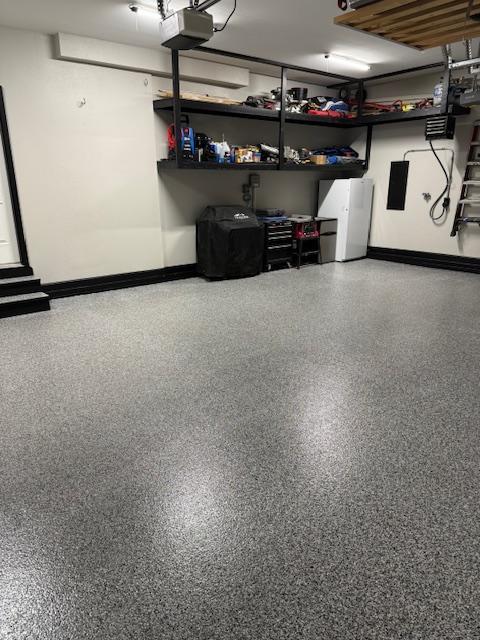
After the base coat, installers add decorative flakes or apply a solid color layer. In a full flake system, technicians broadcast flakes across the entire floor until rejection. This creates texture and added durability.
Random flake systems provide a balanced look with strong wear resistance. Solid color systems deliver a seamless surface that works well in garages, workshops, and commercial spaces.
These options focus on both performance and appearance. The system protects the slab while giving the space a clean, finished look.
Protective Topcoats
The final layer seals the system. Installers apply a clear polyaspartic or urethane topcoat over the epoxy and flakes. This layer guards against abrasion, UV exposure, and chemical spills.
Slip resistant additives improve traction. The finished floor feels solid underfoot and stands up to daily use.
Performance Benefits You Do Not Get With Paint
When you compare paint with a professional epoxy system, the differences show up in daily life.
Chemical resistance: Epoxy systems resist oil, gasoline, and other automotive fluids. Spills stay on the surface and wipe away without leaving deep stains.
Long term durability: A properly installed system lasts 10 to 15 years or longer with normal care. Paint often requires reapplication within a few years.
Improved safety: Texture added to the topcoat provides grip underfoot. The surface feels secure without being rough.
Lasting appearance: The floor keeps its color and sheen under regular traffic. Instead of peeling and fading, the finish stays clean and consistent.
Stronger overall presentation: A finished garage floor makes the entire space look organized and complete rather than unfinished.
Short Term Savings Versus Long Term Value
Many homeowners choose paint because the upfront cost looks lower. The long term expense tells a different story.
When paint fails, you must remove loose material before recoating. Surface grinding often becomes necessary before installing a stronger system. This adds labor and cost.
A professional epoxy system requires a larger initial investment. You pay for preparation, quality materials, and skilled installation. In return, you gain years of performance without repeated repainting.
Long term value comes from durability, reduced maintenance, and confidence in the result. You complete the project once instead of revisiting it every few seasons.
Why Professional Installation Matters
Materials alone do not guarantee success. Installation determines how the system performs.
Experienced contractors test for moisture and repair cracks before coating. They follow precise mixing ratios and apply each layer at the correct thickness. They respect cure times and environmental conditions during installation.
Skipping steps leads to bubbling, peeling, and uneven texture. Skilled installers understand how concrete reacts to temperature and humidity changes. Their experience prevents common failures.
At Mr. Seal Floors, we bring decades of hands on experience to every project. We prepare each slab with professional equipment and follow proven methods from start to finish. Our team installs systems built for real use, not quick cosmetic fixes.
Stop Painting and Start Protecting
If you feel tired of peeling coatings and constant touch ups, take a different approach. A professionally installed system protects your concrete and delivers long term durability.
For homeowners researching epoxy flooring Des Moines properties, the choice of contractor shapes the outcome. Mr. Seal Floors installs garage floor systems designed to perform for years. Protect your investment with a floor built to handle daily life.


Garage flooring done right since 1984.
Monday - Friday
8:00 AM - 5:00 PM
Information

