


Blogs
News & Blogs
How to Use Flooring as a Statement Feature in a Basement Remodel | Mr. Seal Floors
A basement remodel is an opportunity to create a space with its own character, and the floor can do much more than sit quietly beneath the furniture. From a dramatic metallic epoxy finish to clean solid colors and decorative flake systems, the right floor can guide the entire design. It can establish color, texture, and mood while providing a durable surface for everyday use. Before settling on a finish, consider how the floor will influence the room’s style, surrounding materials, lighting, installation requirements, and long-term performance.
Start With the Floor When Establishing the Basement’s Design
Flooring is often selected after paint colors, cabinetry, and furniture. In a basement remodel, reversing that process can produce a more cohesive result. The floor covers a large, uninterrupted area, so its color and finish naturally affect how the entire basement feels.
Begin by deciding how you plan to use the space. A home bar may call for a polished, upscale appearance, while a game room can support a more energetic color combination. Home gyms, offices, family rooms, and multipurpose spaces each have different practical and visual priorities.
Once the purpose is clear, choose the general design direction. A darker floor can create contrast and drama. Neutral colors provide flexibility when furniture or décor may change later. A floor with visible texture or movement can become the main focal point.
Starting with this decision also makes it easier to coordinate walls, cabinets, trim, lighting, and furniture instead of trying to make the floor fit an already completed design.
Create Visual Impact With a Metallic Finish
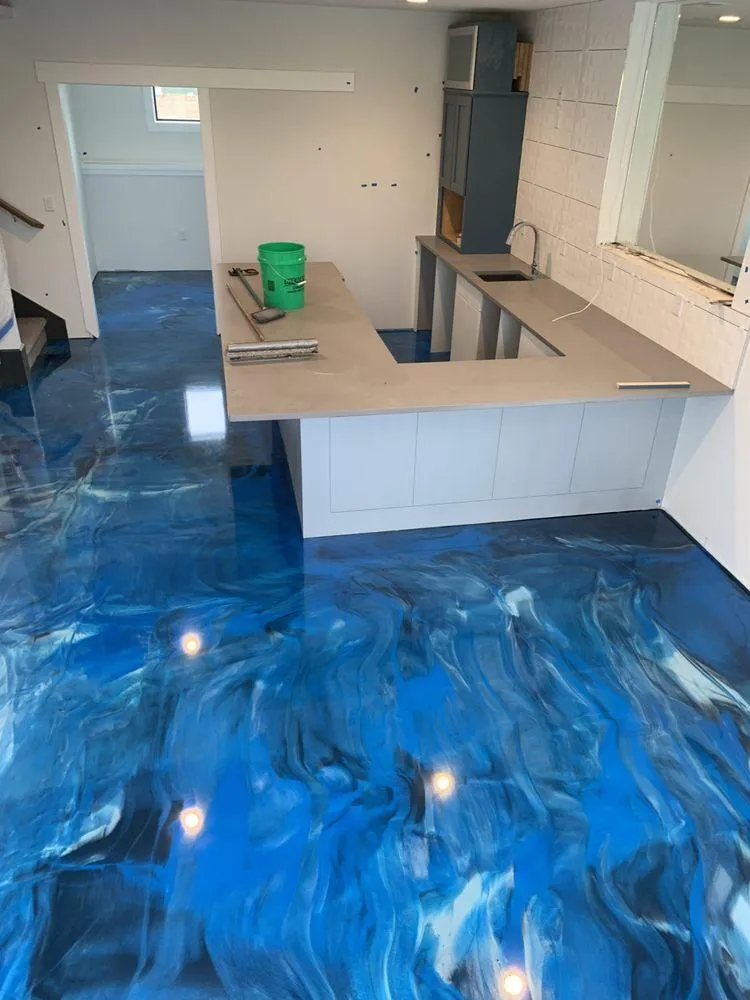
For homeowners who want the floor to immediately attract attention, a metallic system offers depth, movement, and an individual appearance. Metallic powders are blended into 100% epoxy resin before the material is worked across the concrete. The installation process creates variations that make each finished floor unique.
This style works especially well in contemporary basements, entertainment rooms, home bars, media rooms, and offices where the floor is intended to contribute to the atmosphere. Mr. Seal Floors offers more than 25 metallic colors, and colors can be blended to develop custom effects.
The key is balance. When the floor has strong visual movement, surrounding surfaces usually look better when they are more restrained. Simple walls, streamlined furniture, and carefully selected accents allow the flooring to remain the primary statement instead of competing with several bold elements at once.
Use Solid Color Epoxy for a Clean, Deliberate Look
A statement floor does not need elaborate patterns. A solid-color epoxy system can create a strong impression through simplicity, especially in basements designed around a modern or minimalist style.
Mr. Seal Floors uses a 100% solid epoxy base for these systems, creating a seamless, glossy surface available in a wide range of colors. Dark shades can ground an entertainment area, while lighter or neutral colors can make a multipurpose basement easier to coordinate with changing furniture and décor.
Solid-color flooring also gives other features more room to stand out. Wood cabinetry, stone accents, artwork, or an architectural feature wall can provide texture while the floor establishes a consistent visual foundation.
Beyond its appearance, the system is designed to resist stains, scratches, chemicals, and everyday use. That combination makes it a practical choice when homeowners want a polished floor without making the room feel overly busy.
Add Texture and Color With Flake Epoxy Systems
Decorative flake flooring provides another way to make the basement floor visually interesting. Instead of broad movement or one continuous color, flakes introduce smaller variations in tone and texture across the surface.
With a full flake system, Mr. Seal Floors applies a 100% epoxy base coat before broadcasting decorative flakes to refusal. The floor is then protected with a clear polyaspartic topcoat containing grit for slip resistance. Homeowners can choose from numerous flake combinations to create anything from a clean contemporary appearance to a more natural palette.
Random flake systems create a different effect. Colored flakes are distributed more selectively over a two-part epoxy base and sealed with a clear urethane topcoat.
Use the colors in either system to connect the floor with the rest of the basement. A tone repeated in cabinetry, paint, upholstery, or trim can make separate features feel intentional without matching every surface exactly.
Coordinate the Statement Floor With the Rest of the Remodel
A successful statement floor should lead the design rather than compete with it. Pulling one or two colors from the flooring into other areas of the basement is usually enough to create continuity.
If the floor has substantial movement or color variation, consider simpler walls and large furniture pieces. If the floor is solid, introduce visual texture through wood, stone, fabrics, or decorative wall treatments. With flake systems, individual colors in the blend can guide choices for cabinets, counters, trim, and accessories.
Lighting deserves attention too. Gloss, color, and texture can look different under natural daylight, recessed lighting, or warmer decorative fixtures. Reviewing physical samples in the actual basement makes it easier to judge those interactions. Mr. Seal Floors offers free samples so homeowners can see colors and feel textures before making a final selection.
Don’t Sacrifice Floor Preparation for Appearance
Design matters, but a statement floor still needs a properly prepared concrete surface underneath it. The International Concrete Repair Institute recognizes surface preparation as an important part of applying coatings and other protective systems to concrete.
Mr. Seal Floors uses methods such as diamond grinding or shot blasting, depending on the flooring system and project. Proper preparation helps create the bond required for dependable long-term performance.
Basement conditions should also be evaluated before remodeling begins. The U.S. Environmental Protection Agency recommends checking basements for leaks and other signs of moisture before converting them into living spaces. The U.S. Department of Energy likewise explains how moisture can move upward into concrete slabs when proper moisture-control measures are absent.
Addressing the concrete itself before focusing on the finish helps protect the investment being made in the remodeled space.
Make the Basement Floor Part of the Design
Flooring can establish the personality of a finished basement instead of simply completing it. Metallic finishes deliver movement and depth, solid colors create a clean foundation, and flake systems introduce texture and variation. The best choice connects appearance with the way the basement will actually be used.
Ready to Make Your Basement Floor Stand Out?
With more than 35 years of residential, commercial, and industrial flooring experience, Mr. Seal Floors has the knowledge, equipment, and preparation methods needed to build floors for lasting performance. Whether you are considering flake, solid-color, or metallic epoxy, contact Mr. Seal Floors for a free estimate and samples to compare colors and textures for your basement remodel.


Garage flooring done right since 1984.
Monday - Friday
8:00 AM - 5:00 PM
Information

